Product Description
Company Profile
HangZhou YiYuan Industrial Co.,LTD is a wholly-owned subsidiary of Hong Kong Yuan Home. With nearly 20 years of experience in furniture, YiYuan Industrial has possessed extraordinary quality and excellent cost performance, inspired consumers to freely express their creativity, and become a loyal partner of thousands of customers around the world. We will, as always, lead consumers to enjoy the wonderful furniture styles and experience the ultra-cost-effective leisure lifestyle. Adhering to the founder’s manufacturing concept of benefiting thousands of customers, and the unremitting pursuit of nearly 20 years, we always insist on providing consumers with stylish design, rich choices, outstanding quality and professional service
Our Production processes
| 1. Sand casting: It is a commonly used casting process, using sand mold as the casting mold, pouring molten iron into the sand mold, cooling and curing after taking out the cast iron. |
| 2. Casting film method: A film made of a special material is coated on the surface of the sand mold or metal mold before casting to prevent the adhesion between the casting part and the mold during the casting process. |
| 3. Investment casting: The molten metal liquid is injected into the model made of molten wax, and the molten wax is removed after cooling and solidification, and the cast iron can be obtained. This process is suitable for the production of high precision and high surface finish cast iron. |
| 4. Die casting process: the hot metal is injected into the die casting machine, and the high pressure rapid cooling molding is suitable for the production of high strength, high density and high precision cast iron parts. |
| 5. Precision casting: It is a high precision casting process, using molten iron at high temperature and injecting it into the model at low speed to make the surface finish and dimensional accuracy of the cast parts higher. |
| 6. Scrub casting: The scrub agent is added to the sand mold to make the surface of the cast parts more smooth, which is suitable for some cast iron parts with higher surface requirements. |
Product Descriptions
Production process display:
General Product Line:
Transportation:
/* January 22, 2571 19:08:37 */!function(){function s(e,r){var a,o={};try{e&&e.split(“,”).forEach(function(e,t){e&&(a=e.match(/(.*?):(.*)$/))&&1
| Material: | Metal |
|---|---|
| Usage: | Table |
| Condition: | New |
| Customized: | Non-Customized |
| Size: | Dia425xh720mm |
| Structure: | Kd |
| Customization: |
Available
|
|
|---|
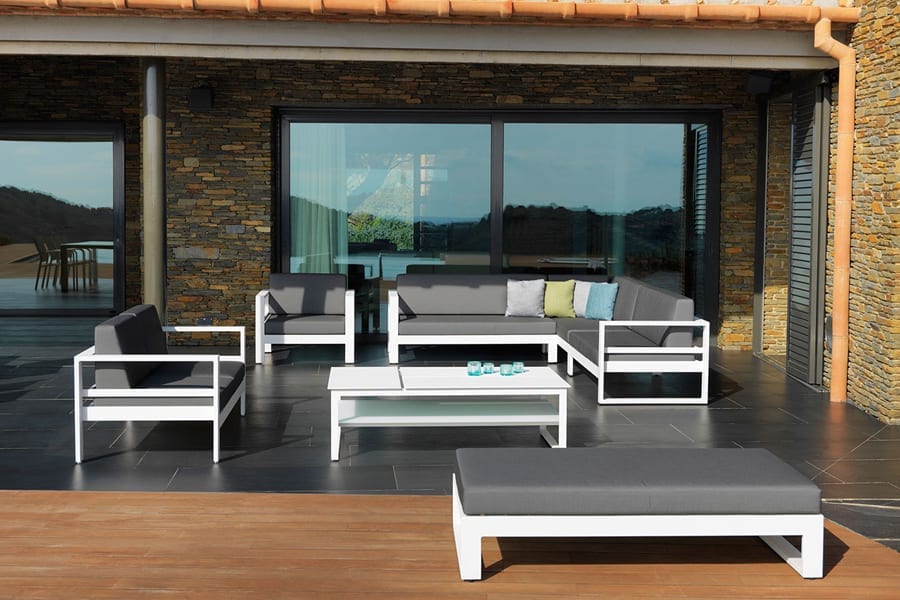
Can I leave aluminum dining tables outside year-round, or do they need storage in winter?
Whether you can leave aluminum dining tables outside year-round or if they require storage during the winter months depends on various factors. Here’s a detailed explanation:
1. Aluminum’s Weather Resistance:
– Aluminum is highly weather-resistant, making it suitable for outdoor use. Unlike materials such as wood or wrought iron, aluminum doesn’t easily rust or corrode when exposed to moisture. It also has excellent resistance to UV rays, which helps prevent fading and deterioration of the surface finish. These qualities make aluminum dining tables well-suited for year-round outdoor use in a variety of climates.
2. Winter Conditions:
– While aluminum is generally resilient to weather elements, extreme winter conditions can still impact outdoor furniture. Factors such as heavy snowfall, freezing temperatures, and ice accumulation can potentially affect the appearance and performance of aluminum dining tables. In regions with harsh winters, it’s advisable to take certain precautions to ensure the longevity of your furniture.
3. Protective Measures:
– To protect your aluminum dining table during the winter months, consider the following measures:
– Covering: Using a weatherproof cover designed for outdoor furniture can provide an extra layer of protection against snow, ice, and debris. Ensure that the cover fits securely and provides sufficient coverage for the entire table.
– Storage: If you have space available, storing your aluminum dining table indoors or in a covered area during the winter can offer optimal protection. This option eliminates exposure to extreme temperatures and prevents accumulation of snow or ice on the table.
– Disassembly: Some aluminum dining tables may have components that can be easily disassembled. If possible, disassembling the table and storing the individual parts can minimize the risk of damage during winter storage.
4. Manufacturer Recommendations:
– It’s important to refer to the specific manufacturer’s recommendations for your aluminum dining table. Some manufacturers may provide guidelines regarding winter storage or precautions to take during extreme weather conditions. Following these recommendations can help ensure the longevity and performance of your furniture.
5. Personal Preference:
– Ultimately, the decision to leave your aluminum dining table outside year-round or store it during the winter months is a personal one. Consider your specific climate, the severity of winter conditions, and your willingness to perform maintenance or protective measures. Additionally, if you live in an area with limited outdoor space for storage, leaving the table outside with appropriate protection may be a practical choice.
In summary, aluminum dining tables are designed to withstand outdoor conditions and can generally be left outside year-round. However, taking protective measures such as covering the table or storing it during extreme winter conditions can help maintain its appearance and extend its lifespan. It’s recommended to follow the manufacturer’s guidelines and consider your specific climate and personal preferences when deciding how to care for your aluminum dining table during the winter months.
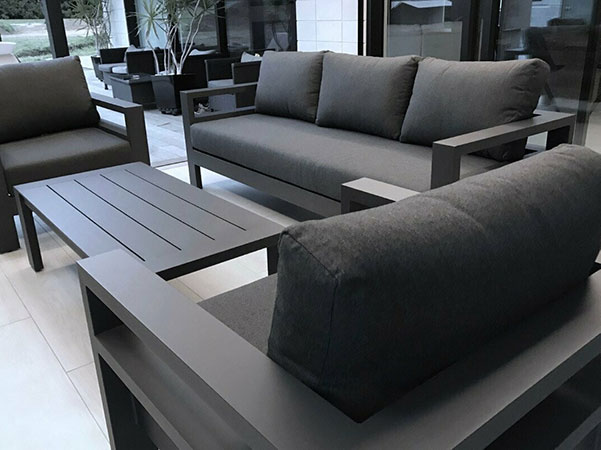
What is the weight capacity of typical aluminum dining tables?
Typical aluminum dining tables have varying weight capacities depending on their design, construction, and intended use. Here’s a detailed explanation:
The weight capacity of an aluminum dining table is determined by several factors, including the thickness and quality of the aluminum used, the table’s overall structure and support, and any additional reinforcement or bracing. While it’s difficult to provide an exact weight capacity for all aluminum dining tables, we can discuss general expectations and considerations:
1. Residential Use:
– For most aluminum dining tables designed for residential use, the weight capacity typically ranges from 200 to 400 pounds (90 to 180 kilograms). These tables are intended to accommodate the weight of the tabletop, food, and normal use by individuals or small groups of people. However, it’s essential to check the specific weight capacity provided by the manufacturer for the table you are considering, as it may vary based on the table’s size, design, and construction.
2. Commercial or Heavy-Duty Use:
– In commercial settings such as restaurants, cafes, or event venues, aluminum dining tables may be designed to withstand heavier loads. Commercial-grade or heavy-duty aluminum dining tables often have higher weight capacities that can range from 500 to 1,000 pounds (225 to 450 kilograms) or more. These tables are built to withstand frequent use, larger gatherings, and the demands of commercial environments.
3. Considerations for Outdoor Use:
– When using aluminum dining tables in outdoor settings, it’s important to consider the impact of environmental factors such as wind, uneven surfaces, and potential movement or shifting. While aluminum is lightweight and corrosion-resistant, it may have specific weight limitations to ensure stability and prevent tipping or damage in outdoor conditions. Manufacturers often provide guidelines for outdoor use and weight limits for their specific models, taking into account these factors.
4. Additional Factors:
– It’s important to note that the weight capacity of an aluminum dining table can also be influenced by other factors such as the design and sturdiness of the table’s legs or base, the type and quality of any additional support structures, and the distribution of weight across the tabletop. If you have specific weight requirements or anticipate heavy use, it’s advisable to consult the manufacturer or retailer for more detailed information regarding the weight capacity of a particular aluminum dining table model.
When considering the weight capacity of an aluminum dining table, it’s crucial to prioritize safety and adhere to the manufacturer’s recommendations. Overloading a table beyond its weight capacity can compromise its stability, structural integrity, and potentially lead to accidents or damage.
To ensure the longevity and safe use of an aluminum dining table, it is generally advisable to distribute weight evenly across the tabletop, avoid placing excessive weight on unsupported areas, and follow any additional care and usage instructions provided by the manufacturer.
Overall, the weight capacity of typical aluminum dining tables can vary, and it’s important to consider the specific design, construction, and recommended usage guidelines provided by the manufacturer to determine the appropriate weight limits for your desired table.
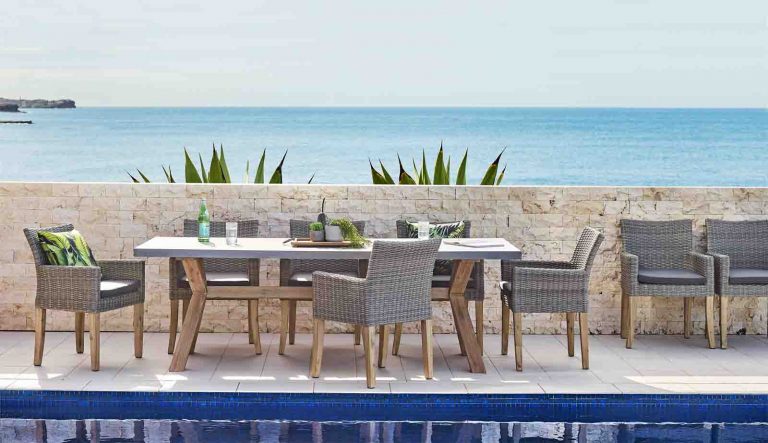
Are there specific finishes or coatings that protect aluminum dining tables from corrosion?
Yes, there are specific finishes and coatings that can protect aluminum dining tables from corrosion. Here’s a detailed explanation:
Aluminum dining tables are often treated with various finishes and coatings to enhance their durability and resistance to corrosion. These finishes create a protective layer on the surface of the aluminum, shielding it from environmental elements. Here are some common finishes and coatings used for protecting aluminum:
1. Powder Coating:
– Powder coating is a popular and effective method for protecting aluminum from corrosion. In this process, a dry powder is applied to the surface of the aluminum and then cured under heat to form a tough and durable coating. Powder coating provides excellent resistance to moisture, UV radiation, scratches, and chemicals. It also enhances the appearance of the table by offering a wide range of colors and finishes to choose from.
2. Anodizing:
– Anodizing is an electrochemical process that creates a thick and robust oxide layer on the surface of aluminum. This oxide layer not only provides corrosion resistance but also improves the aluminum’s hardness and wear resistance. Anodizing is commonly used in outdoor applications where aluminum needs to withstand harsh environmental conditions. It can be left in its natural silver color or dyed to achieve different shades.
3. Clear Coating:
– Clear coatings, such as clear lacquer or clear polyurethane, can be applied to aluminum dining tables to provide a protective barrier against corrosion. These coatings form a transparent layer that seals the aluminum surface, preventing moisture and other corrosive agents from reaching the metal. Clear coatings are often used when maintaining the natural appearance of the aluminum is desired.
4. E-Coating:
– E-Coating, also known as electrodeposition coating or electrocoating, is a method where an electrically charged coating is applied to the aluminum surface. This process ensures complete and uniform coverage, including hard-to-reach areas, providing excellent corrosion protection. E-Coating is commonly used as a primer or base coat before applying other finishes or paints.
It’s important to note that the specific finish or coating used on an aluminum dining table may vary depending on the manufacturer or supplier. Some tables may have multiple layers of different coatings to maximize protection and durability.
When purchasing an aluminum dining table, you can inquire about the specific finishes or coatings applied to ensure proper corrosion protection. Manufacturers or retailers should be able to provide information about the type of coating and its expected durability. Additionally, following the manufacturer’s care and maintenance instructions will help preserve the protective coating and prolong the table’s lifespan.
By choosing an aluminum dining table with the appropriate finish or coating, you can ensure that it remains corrosion-resistant and maintains its aesthetic appeal for years of outdoor enjoyment.
editor by CX 2024-03-26